
Is Your Ash Tree’s Bark Peeling Off or Splitting?
It Might Have Deadly Emerald Ash Borers!
If your ash trees have peeling or splitting bark, you may be looking at a lethal infestation of Emerald Ash Borers!
This invasive pest has caused widespread devastation to ash trees across North America and fast action is essential to save your trees.
If you have ash trees on your property you must know the signs to look out for – as an EAB infestation can only be treated when caught early.
If you spot any signs of an infestation act fast and contact an ISA-certified arborist. They will be able to assess your tree and determine how to safely proceed.
What are Emerald Ash Borers?
Looking at an Emerald Ash Borer (EAB) you could be forgiven for thinking they’re harmless, beautiful even. However, while these half-inch long iridescent green beetles are small, they are responsible for the death of tens of millions of ash trees in the United States and billions of dollars in damage to beautiful mature trees that line our streets, parks, and private properties.
Originally from Asia, the EAB likely made its way to the United States in wood packing material. Since its discovery in Michigan in 2002, it has rapidly spread, leaving millions of dead ash trees in its wake.
EABs were first detected in South Carolina in 2017, arriving from the northern borders with Tennessee and western North Carolina as the insects make their way south. Every year their range expands, and the large populations of ash trees in the Midlands are currently at risk.
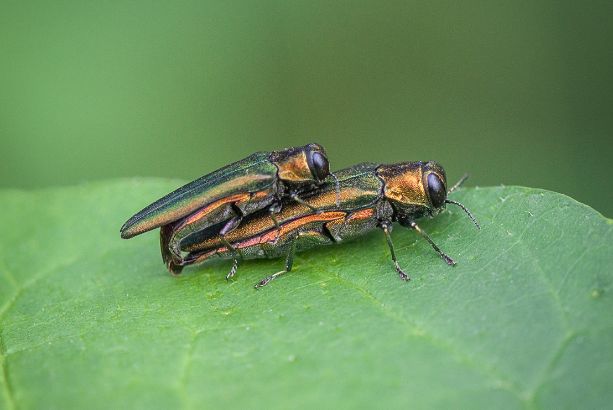
Which trees are affected by Emerald Ash Borers?
Emerald Ash Borers are well named and target all native species of ash tree. While healthy trees may hold out for a bit longer, most trees will die within just a couple years of an infestation if left untreated.
How to Identify Ash Trees
Ash trees are part of the Fraxinus genus and grow into stately trees which can grow to be over 100 feet tall. Here are some key features to help you identify ash trees:
- Leaf Shape: Ash trees have compound leaves, meaning each “leaf” is made up of several smaller leaflets. Typically, there are 5-11 leaflets per leaf, arranged opposite each other on the stem.
- Bark: Mature ash trees have a distinctive bark with diamond-shaped ridges. The bark is generally gray to brown in color.
- Branches: Ash trees have opposite branching, meaning branches and leaves grow directly across from each other, rather than staggered.
- Seeds: Look for paddle-shaped seeds called samaras, often referred to as “helicopters,” which spin as they fall.

How do Emerald Ash Borers damage trees?
What makes the EAB so dangerous is its larval stage. After adult beetles lay their eggs on the bark of ash trees, the larvae burrow under the bark, feeding on the tree’s nutrient-rich inner tissues. In the process of getting a good meal, the larvae destroy your tree’s ability to transport water and nutrients, effectively starving it.
The result is a slow, but certain decline in the tree’s health. Left untreated EAB infestations are always fatal for the tree.
The pest has been called the worst invasive tree pest of our generation, and without active management, entire neighborhoods, parks, and forests could lose their ash trees in a matter of years.
What are the signs of an Emerald Ash Borer infestation?
Recognizing the signs of Emerald Ash Borer damage early can be the difference between saving your ash tree and losing it. Since EAB infestations often progress unnoticed until they are advanced, it’s crucial to know what to look for.
Here are the key indicators of EAB damage that homeowners in South Carolina should watch out for.
Bark Peeling and Splitting
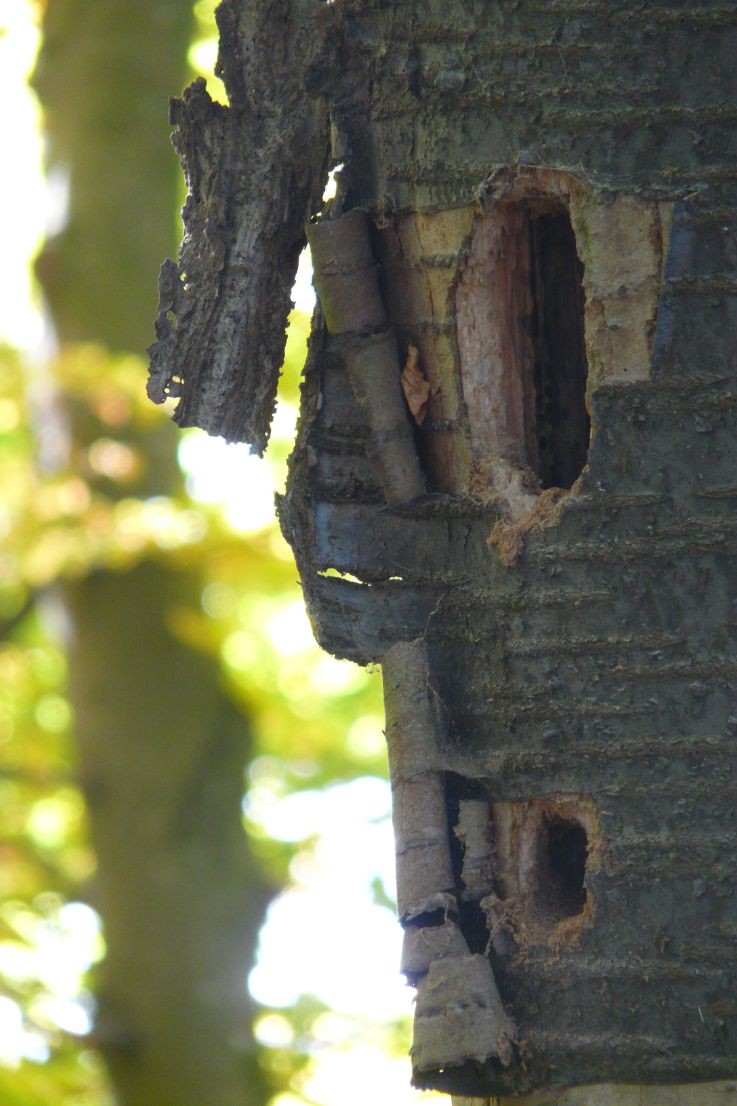
One of the most noticeable signs of an Emerald Ash Borer infestation is bark splitting or peeling off the tree. As the larvae tunnel beneath the bark, they create serpentine, S-shaped galleries that disrupt the flow of nutrients within the tree.
Over time, the bark begins to crack and split. In advanced infestations, large sections of bark may peel away, revealing the damage underneath.
Bark Blonding & Woodpecker Activity
“Bark blonding” refers to the pale, blonde patches that appear on an ash tree’s bark due to increased woodpecker activity. As EAB larvae grow and feed beneath the bark, woodpeckers are attracted to the tree, peeling away outer layers of bark in search of the larvae. This creates light-colored, stripped areas on the bark, often an early indication of an infestation.
While woodpeckers are natural predators of the EAB, their presence is usually a sign that the tree is heavily infested and in decline.
D-Shaped Exit Holes
When the EAB larvae mature into adult beetles, they exit the tree through small, D-shaped holes that are about 1/8 inch wide. These holes are distinctive because they differ from the round or oval holes made by other insects.
If you notice these D-shaped exit holes on your ash tree, it’s a sure sign that EABs have infested the tree.
Thinning Canopy and Leaf Loss
As the tree’s internal structure is compromised by larval feeding, you’ll notice the canopy thinning out as leaves fall prematurely. This usually starts at the top of the tree and works its way downward. In severe cases, the tree may lose most of its foliage, leaving it bare and unable to photosynthesize effectively.
Epicormic Sprouting
In response to the stress of an EAB infestation, ash trees may produce new shoots or branches, known as epicormic sprouts, on the trunk or at the base of the tree. While this may look like the tree is trying to recover, it’s usually a sign that the tree is under serious duress and unable to properly distribute its resources.
How to treat Emerald Ash Borers
Caught early, an EAB infestation is treatable. This is not a DIY project and will require assistance from a professional arborist.
Insecticide Treatment Options
Several insecticides are effective in controlling Emerald Ash Borers, especially when applied in the early stages of infestation.
- Trunk Injections: A professional arborist can inject an insecticide directly into the tree’s trunk. This method is highly effective because it delivers the insecticide directly into the tree’s vascular system, where it can kill larvae feeding under the bark. Trunk injections typically provide protection for one to two years before requiring reapplication.
- Soil Drench Treatments: In this method, insecticide is applied to the soil around the base of the tree, where it is absorbed by the roots and transported throughout the tree. This option can be used for smaller ash trees but may be less effective for larger, heavily infested trees.

The Importance of Timing
The timing of insecticide treatments is critical for success. In South Carolina, the best time to apply treatments is in the spring, before adult beetles begin laying eggs. Early summer can also be an effective treatment window, depending on the product used.
Applying treatments during the larval stage, when the EAB larvae are actively feeding under the bark, increases the chances of killing them before they cause too much damage.
Preventive Treatments
If your tree is not yet infested, but EAB has been detected in your area, preventive treatments are highly recommended. Preventive insecticide applications can protect healthy ash trees from becoming infested, especially if neighboring trees have already shown signs of EAB.
When to Remove the Tree
In some cases, the damage caused by Emerald Ash Borers may be too extensive for insecticides to be effective. Dead or dying ash trees pose a significant safety risk, as they can fall and cause damage to property or injury to people.
Working with a certified arborist to assess the condition of the tree is crucial for determining whether it can be saved or needs to be removed.
Prevent the spread of EAB: Don’t move firewood!
One of the most effective ways to combat the spread of the Emerald Ash Borer is by preventing its unintentional transport. A key contributor to the rapid spread of EAB across the United States and South Carolina is the movement of infested firewood.
To protect ash trees and help stop the spread of this invasive pest, it’s crucial to follow the simple rule: Don’t move firewood. Instead, buy local, and burn local!
Suspect Emerald Ash Borer? Act Fast and Save Your Trees!
Emerald Ash Borers pose a major threat to ash trees across South Carolina and early detection is the only way to save trees. Look out for signs of EAB infestation: bark splitting, D-shaped holes, thinning canopies, and woodpecker activity. If you suspect your tree may be infested, contact an ISA-certified arborist before it’s too late.
Don’t forget the importance of preventing the spread of this destructive pest. Always source firewood locally and avoid moving it across counties to help stop the spread of EAB.