
Fall Webworms:
Identifying and Treating these Spooky Pests
While autumn is known for its webs – most people tend to be thinking of spiders and not caterpillars. However, as summer gives way to fall, the Fall Webworm’s distinctively messy silken bags tend to show up on the ends of deciduous tree branches. As they munch through leaf matter, their tents expand, potentially reaching alarming size.
This article will take a closer look at these hungry pests and offer advice on how to identify and treat Fall Webworms. For serious or widespread infestations, your best bet is to work with a certified arborist, as they have the tools and training necessary to get rid of webworms and ensure the long term health of your trees.
What Are Fall Webworms?
Fall Webworms (Hyphantria cunea) are a species of moth native to North America, whose larvae often show up in late summer and early fall. As caterpillars, they form large, silky nests at the tips of tree branches and understandably are a source of concern for owners of the affected trees.
Identifying Fall Webworm Infestation
The most readily identifiable stage is the caterpillar stage as they make distinctive silken webs, which people often call ‘tents’ or ‘bags,’ around the ends of tree branches. The caterpillars residing within these tents are themselves covered with long white hairs and can reach 1.4-inches (35mm) in length. The coloration of the caterpillars is highly variable, with both dark and light color morphs. As adults, they transform into small, white moths, often with black spots on their wings.

Distinguishing Fall Webworms from Eastern Tent Caterpillars & Bagworms
Fall Webworms are often mistaken for two other common pests: the Eastern Tent Caterpillar and the Evergreen Bagworm – one which they look like and the other whose name simply sounds right.
Eastern Tent Caterpillars make similar web-based nests in trees, but are generally at their peak in the spring, and form their nests in tree crotches (the point where smaller branches emerge from larger limbs) instead of branch tips.
Evergreen Bagworms look nothing like either webworms or tent caterpillars, but their name is reminiscent of the tents that webworms make, so it’s a common enough mistake to hear people refer to them as such. Bagworms prefer to eat conifers like junipers, and instead of forming communal tents, each individual creates their own bag-like structure that they live inside.

The Fall Webworm
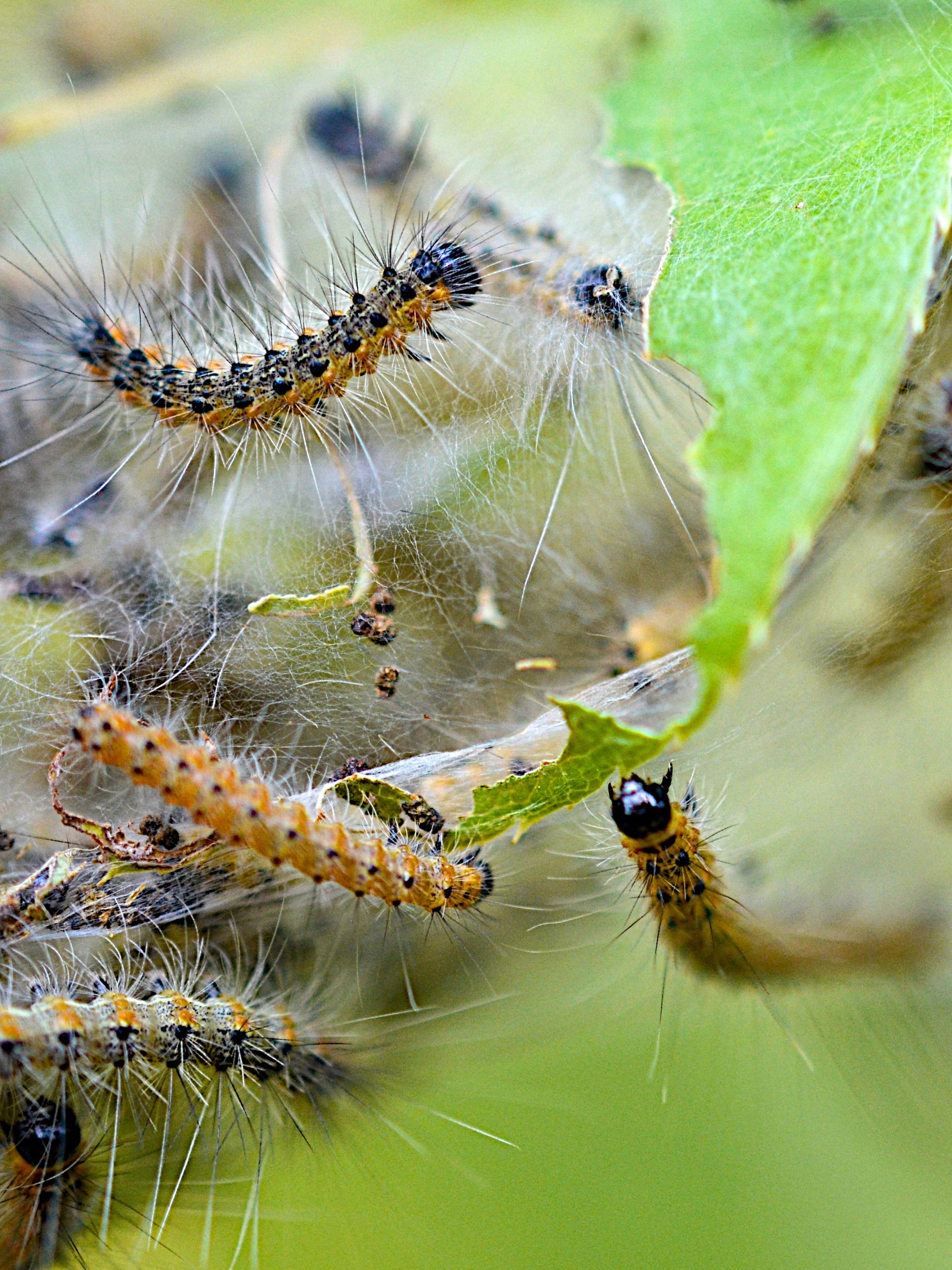
Eastern Tent Caterpillars
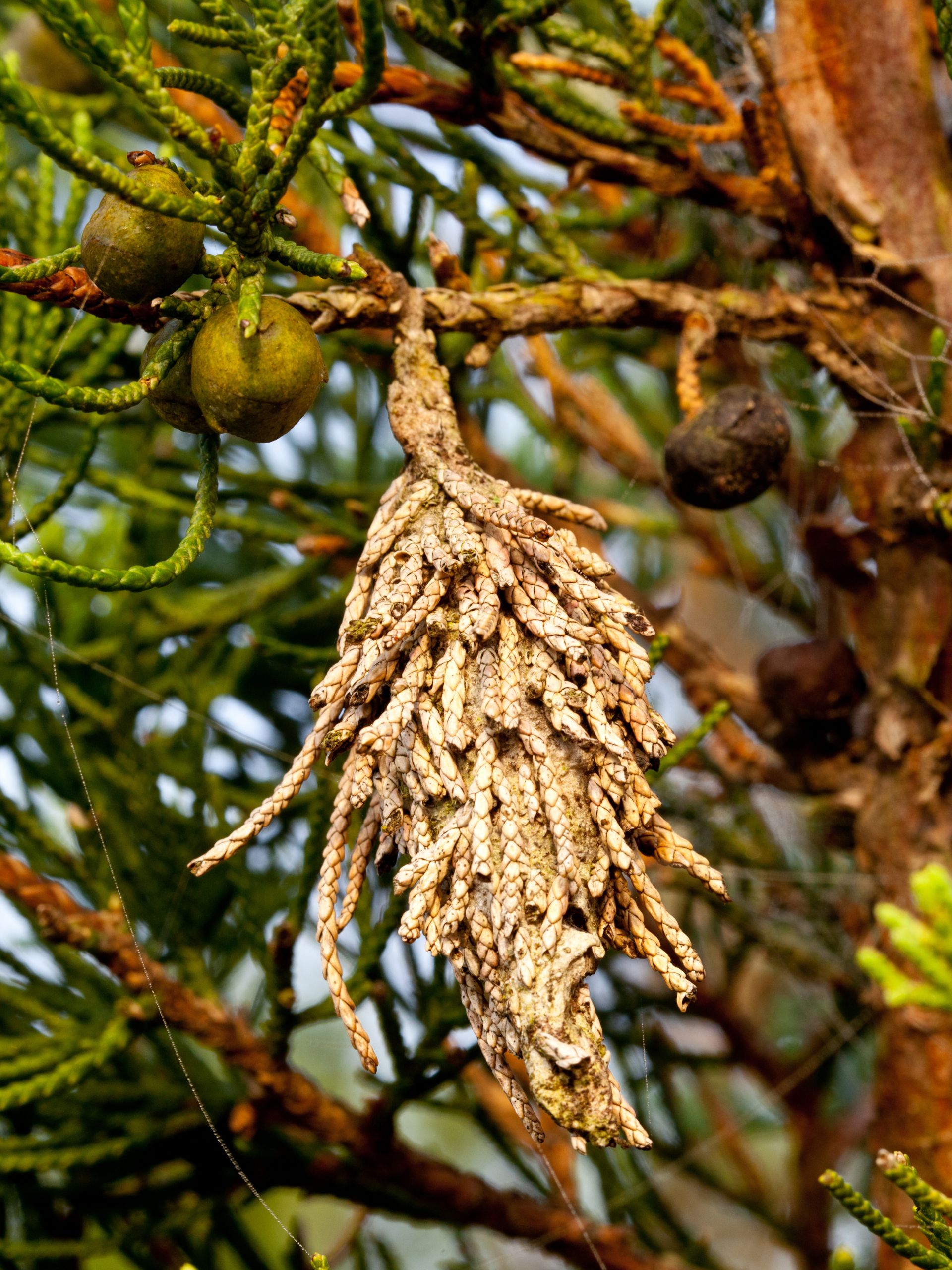
Evergreen Bagworm
Life Cycle of the Fall Webworm
Like all Lepidoptera (butterflies and moths) Fall Webworms go through four life stages: eggs, caterpillar, pupae (cocoon), and adult moth.
Fall Webworms emerge in the late summer or early fall when the adult moths lay their eggs on the undersides of leaves. The tiny yellow eggs are laid in clusters of up to several hundred, and are covered with fine whitish hairs from the mother’s abdomen.
Once they hatch, the caterpillars feed gregariously (in large groups) and lay down silk wherever they go. At first, these webs are tiny and may only enshroud a single leaf – but as they grow their silken trails form cobweb like tents which completely envelope branch tips, or in extreme cases entire branches.
After about 6 weeks and 11 instars (each molt phase is called an instar), the larvae reach maturity and leave their nests to pupate. The pupae overwinter in bark crevices, or within the leaf litter beneath the tree, and hatch again in the spring – starting the cycle anew.
Here in the south, it is common to have as few as two generations or as many as five generations of these pests per year – with the first batch of eggs hatching in late spring.
Why do Webworms Make Webs?
The distinctive tents that webworms make are a curious adaptation that protects these pests from predators and helps speed up their development.
By living communally, webworms actually expose themselves to greater risk of parasites and disease – but these disadvantages ultimately prove worthwhile because the nests serve as an effective barrier against their larger predators.
Additionally, the nests trap heat and can reach upwards of 122F (50C), enabling faster digestion and growth. Insect development is highly dependent on temperature – with higher temperatures resulting in much faster maturity..
Which Trees do Fall Webworms Impact?
Fall Webworms feed on a wide variety of deciduous tree species, including more than 400 species of ornamental, fruit, and hardwood trees. However, here in the South Carolina Midlands, they are most often found on:
- Hickory
- Pecan
- Maples
- River Birch
- Oak
- Persimmon
- Sweetgum
- Crabapple

The Damage Potential of Webworm Infestation
While webworm infestations can be very alarming looking – they generally do not pose a long-term risk to the tree as the worst of the defoliation happens in late summer and the damage is primarily aesthetic.
However, even though the damage is typically not life threatening – the webs and leaf loss is unsightly. The webs often last long after the caterpillars have left, leaving behind ugly reminders of their presence. Untreated, they will inevitably return year after year.
It is most common for webworm infestations to stay relatively small, impacting just the tips of tree branches – but in extreme cases entire trees may be defoliated. Already stressed or otherwise damaged trees are at greater risk and need to be treated for webworm infestations.
Treating Fall Webworms
Treatment of Fall Webworms is often not necessary – as the infestations are self limiting. But, for many homeowners, seeing these ugly web bags on the end of tree branches day in and day out is enough of a justification to eliminate them.
Helping their Natural Enemies
One of the easiest treatment methods is to simply give their natural enemies a leg up. Simply physically breaking up their nests makes it easier for predators like birds, stink bugs, ants, and wasps to reach them.
Pruning
Another option for Fall Webworm removal is pruning away the branches which are affected by their tents. While this is a very effective method, it is best used very early in the infestation. In some cases pruning is not desirable as a treatment as the pruning can be as aesthetically disruptive as the bags themselves were.
We recommend that homeowners consult with a professional arborist before undertaking any extensive tree pruning as different types of trees respond differently to pruning.
Insecticide Treatments
Typically, insecticidal treatments are not necessary for treating Fall Webworms, but they can be a useful tool for protecting ornamentals or sensitive plants.
Treatments containing Bacillus thuringiensis (Bt) or spinosad are recommended as they are safe, effective, and relatively benign to beneficial insects. It is important to apply these pesticides when the webs first appear as the webs themselves are water resistant and the treatment may not reach the caterpillars, and larger caterpillars are less susceptible to the treatments.
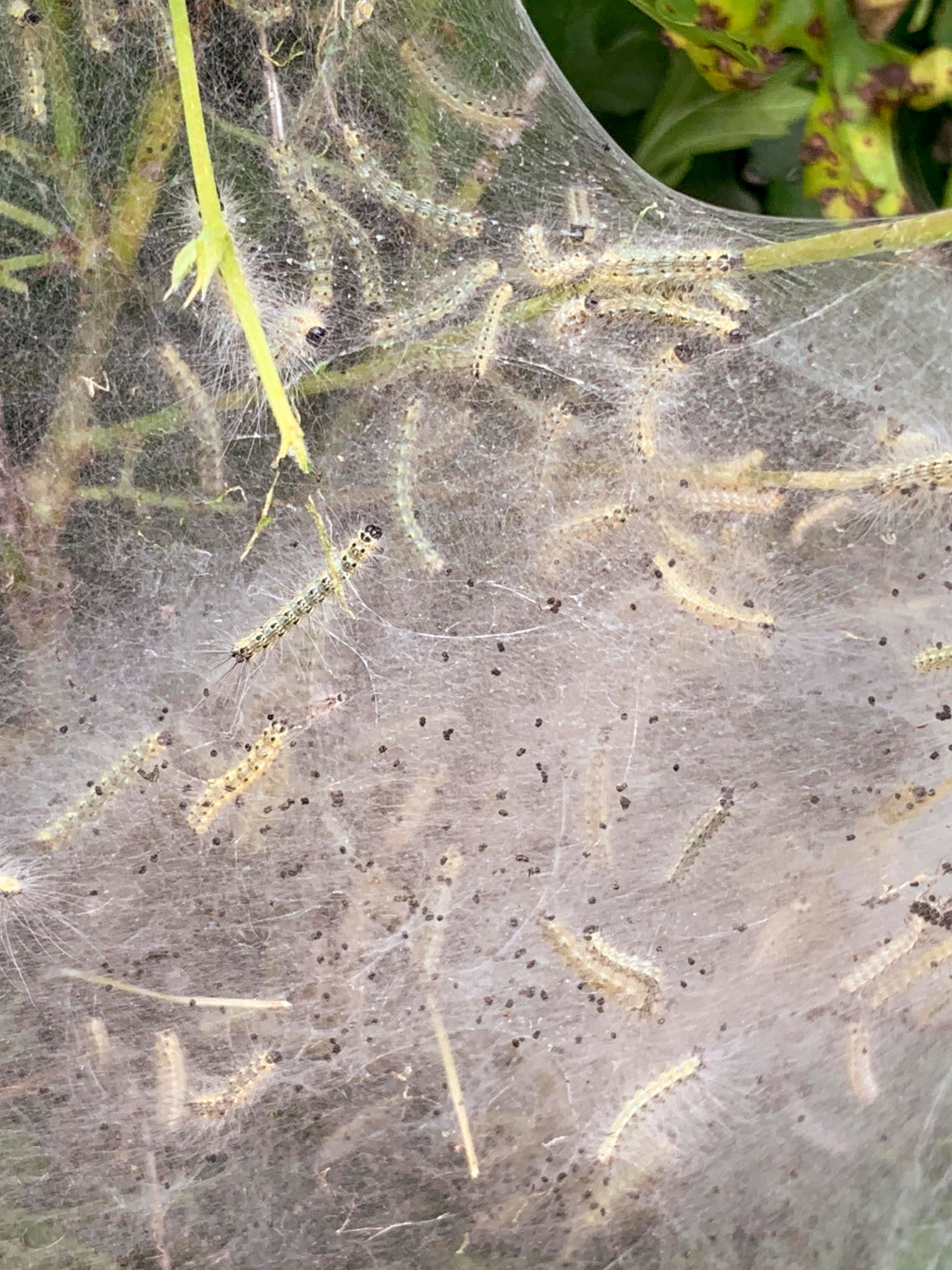
Get Professional Help for Fall Webworms
While Fall Webworms are not a particularly dangerous pest – their unattractive nests often persist through the winter leaving an eye sore for months to come. For best results, you should start treating Fall Webworms early, ideally while the caterpillars are still small as this is when treatment is least invasive and most effective.
If you are having trouble dealing with Fall Webworms, the most reliable solution is to work with a certified arborist. They have the tools and expertise necessary to safely remove these and other pests and ensure that your trees will remain healthy and beautiful for decades to come.