
Crepe Myrtle Bark Scale 101:
How to Spot, Treat, and Prevent This Sticky Pest
Have you ever walked outside to find your crepe myrtles looking a little… off? Maybe the branches are black, your patio feels sticky, or you’ve spotted strange fuzzy white patches on the bark. If so, you’re likely dealing with Crepe Myrtle Bark Scale – a pest that’s becoming more and more common.
This isn’t just a cosmetic problem. Crepe Myrtle Bark Scale weakens the tree by feeding on its fluids, leaving it stressed and vulnerable to other issues. On top of that, the sticky residue it leaves behind attracts black sooty mold, which can spread to other plants and make your entire yard look messy.
In this blog, we’ll cover everything you need to know about Crepe Myrtle Bark Scale, including:
- What it is and how to spot the early signs.
- Why it’s harmful to your crepe myrtles (and the plants around them).
- The best treatment options to get rid of it for good.
- Steps you can take to keep your trees healthy and pest-free.
With the right knowledge – and a little help from tree care professionals – you can keep your crepe myrtles looking their best year after year. Let’s dive in!
What is Crepe Myrtle Bark Scale?
Crepe Myrtle Bark Scale is an invasive pest that targets crepe myrtles by feeding on the fluids inside the tree’s woody stems, specifically the phloem. Unlike other pests that attack leaves, this scale insect latches onto the bark and pulls nutrients directly from the tree’s vascular system.
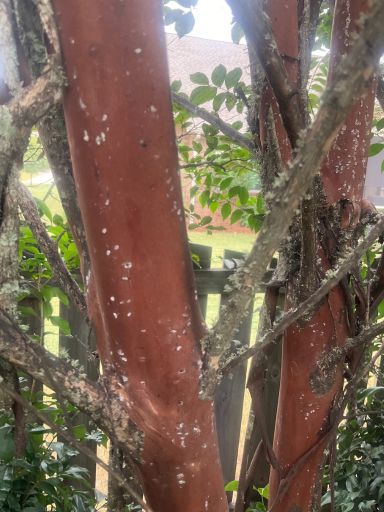
At first glance, you might not even notice the infestation. It often starts small, with tiny fuzzy or woolly-looking spots appearing on branches or trunks. These clusters are actually colonies of the scale insects, protected by a waxy covering. Over time, as the infestation grows, the tree begins to suffer, and you’ll likely see other, more obvious signs that we will get into more detail about a little later.
While some resources downplay the impact of Crepe Myrtle Bark Scale, claiming it won’t kill the tree, it does weaken the immune system, leaving crepe myrtles stressed, unsightly, and vulnerable to further issues. In short: this pest isn’t just a nuisance; it’s a problem that requires attention.
The good news? Early detection and proper treatment can stop the infestation and restore your crepe myrtle’s health. In the next section, we’ll cover how to spot the telltale signs of Crepe Myrtle Bark Scale before it gets out of hand.
How to Identify Crepe Myrtle Bark Scale
Identifying Crepe Myrtle Bark Scale early is key to preventing a full-blown infestation. Fortunately, the signs are distinct once you know what to look for. Here’s how you can tell if your crepe myrtles are under attack:
Fuzzy, Woolly Spots on the Bark
- Look closely at the branches and trunk for small, fuzzy white or gray clusters. These spots are colonies of scale insects covered in a waxy, protective coating. The clusters often appear in crevices or along the smooth parts of the bark.
Sticky Residue (Honeydew)
- If you notice a sticky, shiny coating on your patio, sidewalk, or car parked under your crepe myrtle, that’s honeydew – a sugary secretion left behind as the insects feed.
- On sunny days, a heavy infestation might even look like tiny droplets falling from the tree when the light hits just right. This “honeydew rain” is one of the more unpleasant signs of an infestation.
Black Sooty Mold
- The honeydew attracts a fungus called black sooty mold, which grows on the sticky surfaces.
- You’ll often see this as a black, powdery coating on the limbs of your tree, nearby plants, or even on surfaces like sidewalks or walls. Sooty mold doesn’t just look bad – it can block sunlight and hinder photosynthesis in surrounding plants.
Declining Tree Health
- While Crepe Myrtle Bark Scale won’t kill a tree outright, it does weaken its immune system, leaving it looking stressed and unhealthy.
- You might notice stunted growth, thinning canopies, or limbs that appear darker and less vibrant than usual.

Quick Homeowner Checklist
Here’s a quick way to check for Crepe Myrtle Bark Scale:
✔Are the limbs black and sticky?
✔Do you see fuzzy white or gray clusters on the bark?
✔Is there black mold on nearby plants or hard surfaces?
✔Do you notice sticky residue on sidewalks, cars, or patios?
If you answered “yes” to any of these questions, it’s time to take a closer look. Catching the problem early can save you time, money, and your tree’s health.
In the next section, we’ll talk about the damage Crepe Myrtle Bark Scale can cause and why quick action matters.
Why is Crepe Myrtle Bark Scale Harmful?
Crepe Myrtle Bark Scale may start small, but the damage it causes can have lasting effects on your trees and the surrounding landscape. This pest latches onto the bark of crepe myrtles and feeds on the tree’s phloem, which is responsible for transporting essential nutrients and water. As the scale insects drain these vital resources, the tree’s immune system becomes weakened and less capable of fending off other issues, such as disease, drought, or additional pest infestations.
When a crepe myrtle is under stress, it shows. The tree may experience stunted growth, thinning canopies, or branches that appear darker and lifeless. Over time, an infested tree can decline so significantly that it loses its ornamental value, turning what was once a focal point of your yard into a tired, unappealing eyesore.
Adding to the problem, Crepe Myrtle Bark Scale leaves behind honeydew, a sticky secretion that drips onto nearby surfaces. While honeydew itself may not seem harmful, it attracts black sooty mold, a fungus that thrives on the sugary residue. Sooty mold coats the tree’s bark, branches, and even surrounding plants, forming an unsightly black layer. Though the mold doesn’t feed on the tree directly, it blocks sunlight, which can interfere with the tree’s ability to photosynthesize and grow properly. Worse still, the mold spreads to plants and flowers beneath the tree, leaving them similarly stressed and unable to thrive.
The damage doesn’t stop there. The honeydew and mold can quickly create a mess in your yard, covering patios, sidewalks, cars, and outdoor furniture. Homeowners often notice sticky, blackened surfaces long before they realize their crepe myrtles are the source of the problem. For many, this is where the real frustration sets in, as the pest’s impact becomes impossible to ignore.
Some may argue that Crepe Myrtle Bark Scale isn’t lethal, but this perspective misses the bigger picture. A tree weakened by scale is far more vulnerable to additional stressors, which can compound over time and lead to significant decline. Healthy, thriving crepe myrtles add beauty, shade, and value to your landscape, but a tree left untreated can quickly become a liability.
Addressing the problem early is essential. Not only will you protect your crepe myrtles, but you’ll also prevent the damage from spreading to other plants and areas of your yard. In the next section, we’ll explain how Crepe Myrtle Bark Scale spreads so easily—and what steps you can take to stop it before it becomes a bigger issue.
Life Cycle and Spread of Crepe Myrtle Bark Scale
Understanding the life cycle and spread of Crepe Myrtle Bark Scale is key to stopping it before it gets out of control. Like many invasive pests, this scale insect is incredibly efficient at finding new places to settle, which is why infestations can seem to appear almost overnight.
Crepe Myrtle Bark Scale has a multi-stage life cycle that allows it to thrive and spread quickly. After the eggs hatch, the pests enter what’s known as the crawler stage. At this point, the crawlers are tiny—so small you can barely see them without magnification. They move across the bark in search of a place to attach, feed, and mature. This stage is the most mobile, and unfortunately, it’s also when the pests are most likely to spread to other trees.
So, how does it spread? The answer is surprisingly simple:
- Birds and Insects – Crawlers often hitch a ride on birds or other insects that land on an infested tree. When these creatures move to another tree or property, they can carry the pests with them.
- Wind – Because crawlers are so small and lightweight, even a gentle breeze can blow them onto nearby crepe myrtles, especially if the trees are planted close together.
- Tree-to-Tree Contact – Crepe myrtles planted too close to one another provide a natural pathway for crawlers to travel. Branches or twigs that touch make it easy for the pests to move between trees.
- Nurseries and New Trees – Infestations sometimes start when homeowners unknowingly plant already-infected trees purchased from a nursery. Crepe Myrtle Bark Scale originally arrived in the U.S. through shipments of plants, and it remains a risk when bringing new trees into your landscape.
Once the scale insects settle on a tree, they feed, mature, and reproduce, completing multiple generations in a single year—up to 3 or 4 generations depending on the climate. This rapid reproduction means that a small infestation can escalate quickly if it’s left unchecked.
While Crepe Myrtle Bark Scale primarily affects crepe myrtles, its impact extends beyond the tree itself. The honeydew secretions drip onto nearby plants, encouraging the spread of black sooty mold, which can stress and weaken shrubs, flowers, and other vegetation in your landscape. Even your patio, sidewalks, and outdoor furniture can become sticky and blackened, spreading the frustration to every corner of your yard.
Because of how easily Crepe Myrtle Bark Scale spreads, early detection and intervention are essential. Regular tree inspections, particularly in the spring and summer, can help catch the problem before it gets out of hand. In the next section, we’ll explore the most effective treatment options to eliminate this pest and restore your trees to their former health.
Treatment Options for Crepe Myrtle Bark Scale
When it comes to treating Crepe Myrtle Bark Scale, the right approach can mean the difference between eliminating the infestation and watching it come back year after year. While there are products available for homeowners, treating bark scale effectively requires the right tools, timing, and expertise—something professionals are better equipped to handle.
The first and most effective method for treating an active infestation is a systemic pesticide soil drench. This involves applying a specialized pesticide around the base of the tree, where it’s absorbed through the roots and carried throughout the tree’s vascular system. Once the scale insects feed on the tree’s fluids, they ingest the pesticide, which eliminates the infestation. Unlike sprays, this method treats the entire tree, not just specific areas. Homeowners can buy similar products, but they’re often too diluted to deliver the same results.
If the infestation returns the following year, or if treatment is needed when the weather warms up, horticultural oil sprays are a great alternative. These oils work by smothering the insects, including the eggs and crawlers. However, timing matters. Oil sprays are most effective in cooler temperatures—generally spring and fall. Once summer temperatures hit 80°F or higher, oils can burn the leaves, causing more harm than good. For tall trees, oil sprays also require professional-grade equipment to ensure the entire canopy is treated, which can be a challenge for homeowners.
During midsummer, when systemic pesticides are less effective due to slower root uptake, arborists often use insect growth regulators (IGRs). These specialized sprays interrupt the insect’s ability to reproduce, effectively stopping the infestation from continuing into the next season. While IGRs don’t kill the insects already on the tree, they prevent future generations, breaking the cycle of infestation.
In winter, Crepe Myrtle Bark Scale typically goes dormant in the egg stage. Treatments during this time are less effective, but it’s still a great time for monitoring and planning. By addressing the infestation early in the spring, you can stop it before the crawlers have a chance to spread.
While homeowners may try to tackle Crepe Myrtle Bark Scale on their own, it’s not always practical. Tall crepe myrtles are difficult to treat without the proper equipment, and over-the-counter products often fall short of professional treatments. Arborists not only have the tools to apply treatments effectively, but they also know the best times to apply each method for long-term success.
The key to managing Crepe Myrtle Bark Scale is early detection and follow-up care. Treating the infestation is just the first step; keeping your trees healthy with regular monitoring and care helps prevent the problem from coming back. A professional Plant Health Care (PHC) program can provide the ongoing support your trees need to thrive and remain pest-free.
In the next section, we’ll explore preventative measures you can take to protect your crepe myrtles from bark scale—and keep your landscape looking its best.

Preventative Measures to Protect Your Crepe Myrtles
The best way to deal with Crepe Myrtle Bark Scale is to stop it before it becomes a problem. While there’s no foolproof way to keep pests away forever, there are a few preventative steps you can take to make your trees less susceptible and keep your landscape looking its best.
- Schedule Annual Tree Inspections
Having a certified arborist inspect your trees once a year is one of the most effective ways to catch problems early. During an inspection, arborists can identify the first signs of bark scale, monitor tree health, and recommend treatments before an infestation takes hold. Just like an annual checkup at the doctor keeps you healthy, annual tree care helps your crepe myrtles thrive. - Focus on Plant Health
Healthy trees are naturally more resistant to pests and diseases. Crepe Myrtle Bark Scale tends to target trees that are already stressed, so maintaining overall tree health is key. A few ways to boost your tree’s health include:
-Proper watering (deep, infrequent watering rather than shallow, frequent sessions).
-Mulching around the base of the tree to retain moisture and regulate soil temperature.
-Avoiding unnecessary pruning, as improper cuts can stress the tree and invite pests.
If you’re unsure what your trees need, a Plant Health Care (PHC) program can provide ongoing monitoring, fertilization, and treatments to strengthen your trees year-round. - Plant with Care
If you’re adding new crepe myrtles to your landscape, spacing matters. Trees that are planted too close together make it easy for bark scale crawlers to spread from branch to branch. When planning your landscape, give your crepe myrtles enough room to grow and breathe.
Before planting, inspect new trees for any signs of bark scale, such as woolly patches or sticky residue. This simple step can save you from introducing an infestation to your property. - Keep an Eye Out for Early Signs
While annual inspections are important, you can also play a role in spotting problems early. Check your crepe myrtles regularly, especially during the spring and summer months when bark scale is most active. Look for fuzzy white patches, sticky honeydew, or black sooty mold on the bark and surrounding plants. The sooner you catch an infestation, the easier it is to treat. - Avoid Over-Irrigation
Overwatering can stress trees and create a favorable environment for pests. Crepe myrtles prefer well-drained soil, so ensure your irrigation system isn’t adding unnecessary moisture. This is especially important for trees located near lawns or flower beds, where irrigation may be more frequent.
Preventing Crepe Myrtle Bark Scale comes down to keeping your trees strong and paying attention to the early warning signs. A little proactive care goes a long way in maintaining the health and beauty of your crepe myrtles. If you’re unsure about your trees or notice something unusual, it’s always a good idea to call in a professional. Early intervention can save your trees—and save you the stress of dealing with a larger problem later on.
In the final section, we’ll highlight how Socks and Freeman have successfully managed bark scale cases and how expert care can make all the difference for your landscape.
How Sox and Freeman Successfully Manage Crepe Myrtle Bark Scale
At First Presbyterian Church in downtown Columbia, we faced one of the worst cases of Crepe Myrtle Bark Scale we had ever encountered. The church had 28 crepe myrtles, and every single tree was heavily infested. Sticky limbs, black mold, and visible signs of stress covered the property, creating a major challenge. Without proper treatment, these trees would have continued to decline, impacting the beauty and health of the entire landscape.
To restore the crepe myrtles, we implemented a multi-step treatment plan:
- We began with a systemic pesticide soil drench to eliminate the scale insects at the source. The pesticide was absorbed through the roots and traveled throughout the tree, targeting the pests as they fed.
- To ensure thorough control, we followed up with horticultural oil sprays to smother any remaining insects, eggs, or crawlers. Timing was key—we applied the oils during cooler months to avoid damage to the foliage.
- Recognizing the importance of long-term care, we scheduled regular follow-up inspections and spot treatments as needed. Treating bark scale is never “one and done,” so ongoing monitoring allowed us to keep the trees healthy and prevent re-infestation.
The results were clear. Today, the 28 crepe myrtles at First Presbyterian Church are thriving with full, pest-free canopies. What was once an overwhelming problem has been transformed into a beautiful landscape centerpiece, thanks to our expertise, careful planning, and continued care.
This case shows how a proactive, professional approach can save even the most severely infested trees. With the right treatments and ongoing monitoring, we can eliminate bark scale and protect the long-term health of your crepe myrtles.

Protect Your Crepe Myrtles for the Long Run
Crepe Myrtle Bark Scale may be a stubborn pest, but with the right approach, it’s entirely manageable. From understanding the early signs—like fuzzy white patches, sticky honeydew, and black sooty mold—to knowing how it spreads and what treatments work best, you now have the tools to take action before the problem worsens.
At Sox and Freeman, we’ve seen firsthand how quickly bark scale can take over, but we’ve also seen how effective professional care can be in turning things around. Whether it’s a severe infestation like the 28 crepe myrtles at First Presbyterian Church or a single tree in your yard, the right treatment and follow-up care can restore your trees and keep your landscape looking its best.
The key is to act early. If you’re seeing signs of bark scale—or just want peace of mind that your trees are healthy—don’t wait. A professional inspection can make all the difference in catching problems early, protecting your investment, and keeping your crepe myrtles thriving for years to come.
Ready to give your crepe myrtles the care they deserve? Contact Sox and Freeman today to schedule an inspection or learn more about our Plant Health Care programs. Let’s work together to keep your trees healthy, beautiful, and pest-free.